

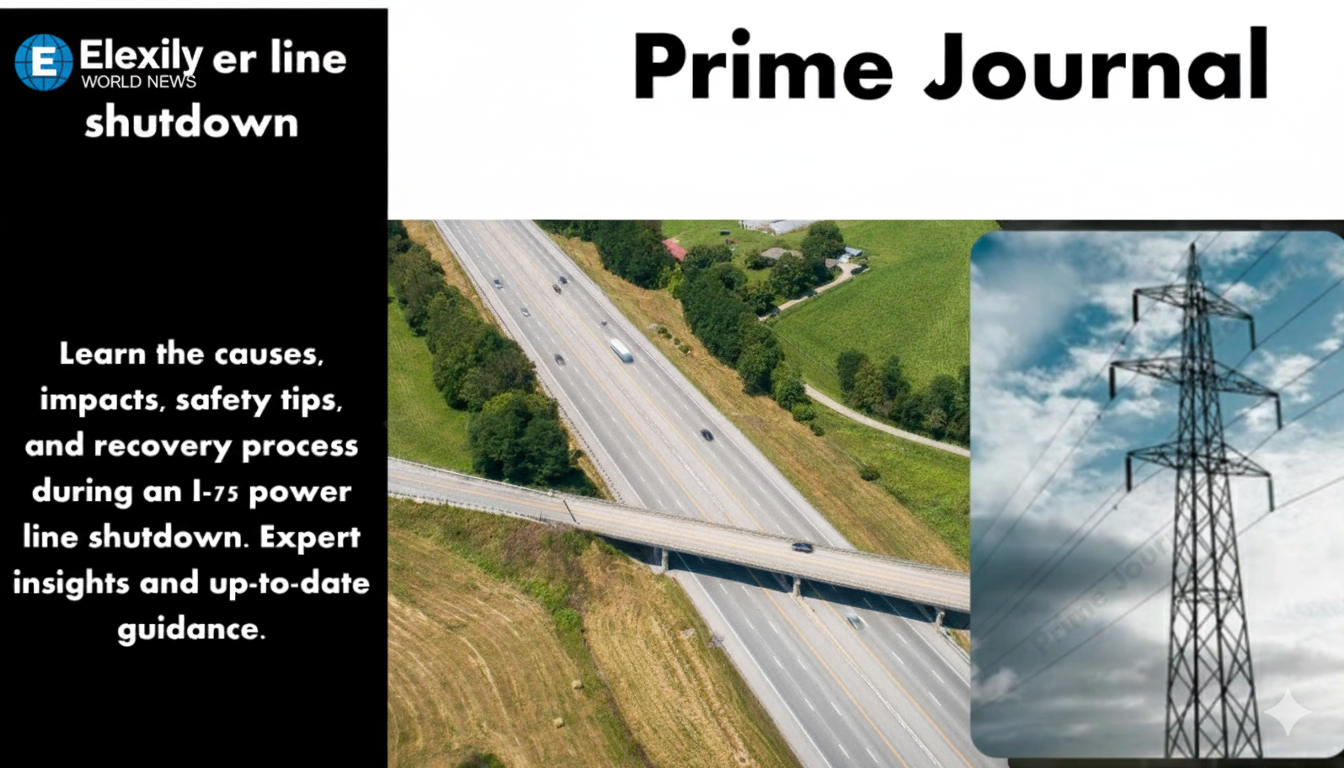
The I-75 power line shutdown created major disruptions for drivers, local communities, and emergency responders as a critical stretch of the interstate was forced to close for safety reasons. This incident highlighted how vulnerable key highways can be when downed power lines, severe weather, or unexpected structural issues threaten public safety.
As crews worked to assess damage, restore electricity, and clear the roadway, the shutdown led to significant delays and detours across the region. Understanding what caused the closure, i-75 power line shutdown how long it lasted, and what steps authorities took offers valuable insight into managing future emergencies and maintaining infrastructure safety during unexpected roadway crises.
What Caused the I-75 Power Line Shutdown?

The I-75 power line shutdown began when severe storms knocked down high-voltage transmission lines across the freeway. The collapsed structures caused significant bold power line damage, and crews had to act fast to protect bold motorists from further danger. Strong winds and lightning contributed to the failure, and the storm hit with enough force to compromise nearby towers, cables, and ground anchors.
The incident pushed bold authorities to initiate an immediate bold emergency shutdown to prevent accidents and allow bold emergency response teams to begin clearing debris. The fallen lines stretched across several lanes, which made it impossible to keep traffic moving. This triggered large-scale delays that affected the entire region’s transportation planning and caused widespread traffic congestion.
When the Shutdown Happened and How Long It Lasted
The shutdown began shortly after the storms passed through the region. Transport officials quickly realized the danger and closed major corridors to keep bold motorists and repair teams safe. The closure lasted long enough to severely affect daily commuters and long-distance travelers who depend on I-75 for regular movement for i-75 power line shutdown.
The timeline extended from the initial collapse to a multi-day stretch of repairs, inspections, and structural evaluations. A detailed timeline is shown below:
| Phase | Description |
| Initial Shutdown | bold emergency response after lines collapsed |
| Structural Review | Engineers performed bold inspections |
| Repair Period | bold utility crews completed electrical restoration |
| Safety Check | Final bold road safety and lane verification |
| Reopening | Gradual return of I-75 reopening traffic |
Downed Power Lines and Storm Damage Explained
i-75 power line shutdown The downed lines resulted from intense storms that carried heavy winds. These winds pushed the towers beyond their limits, and the weakened structures finally collapsed across the freeway. The fallen equipment caused immediate risks to bold motorists and forced rapid bold emergency response action. These failures also affected nearby power distribution routes.
The incident highlighted how vulnerable electrical infrastructure can be during violent weather events. Many engineers noted that the combination of saturated soil, aggressive wind bursts, and aging poles contributed to the widespread failures. This not only interrupted traffic but also put additional pressure on infrastructure reliability concerns across the entire region.
Traffic Impact: Closures, Delays, and Detours
The closure caused intense traffic delays because many lanes were blocked. Drivers were forced into detour routes that redirected them through smaller local roads. These routes weren’t designed for highway-level volumes, and this created severe bold traffic congestion across those neighborhoods.
The shutdown affected emergency vehicles, commercial trucks, and long-distance travelers who depended on consistent access. Many people experienced longer commute times and unpredictable road conditions. Some even found themselves rerouting several times a day due to last-minute closures and new traffic flow changes.
Safety Measures Taken During the I-75 Shutdown
As the shutdown began, bold law enforcement arrived quickly and set up barricades to create safe zones. They monitored the entire corridor to keep both workers and bold motorists safe. Speed limits dropped significantly, and reduced speed limits signs appeared along surrounding corridors.
The state deployed additional lighting, cones, and reflective signage to guide traffic. These safety precautions helped prevent accidents during the chaotic period. Crews enforced strict boundaries around construction zones, ensuring that no unauthorized vehicles entered dangerous areas.
Repair and Restoration Work by Utility Crews
During the shutdown, bold utility crews worked around the clock to stabilize the site. They cleared debris, reinstalled towers, replaced cables, and tested electrical systems. Every step required expert coordination because of the high-voltage environment.
The incident allowed teams to perform additional maintenance work such as resurfacing, pothole repairs, and structural corrections. These repairs improved long-term roadway improvements and offered better support for the surrounding transportation network.
Reopening Updates: How Traffic Was Restored on I-75
The final reopening process began once engineers confirmed the corridor was safe. They inspected every repaired section and performed multiple quality checks. Crews verified structural stability, ensured electrical clearance, and tested all final installations.
The I-75 reopening happened in stages. Authorities opened certain lanes first while leaving others restricted for finishing touches. This gradual reopening helped prevent sudden surges in traffic that could have overwhelmed the area.
Guidance for Drivers After the Reopening
Drivers returning to the route noticed updated signs, smoother pavement, and cleared shoulders. You may still see evidence of road maintenance work near the edges, as workers finalize smaller tasks. These improvements help protect bold motorists and boost long-term road safety.
Anyone using the highway should rely on navigation apps, real-time traffic updates, and local transportation apps to avoid new delays. The corridor may still experience minor traffic flow changes as crews wrap up leftover projects.
Effects on Local Communities and Businesses
The shutdown affected stores, restaurants, and service stations near the highway. Many dealt with fewer customers because of detours and alternate routes. Others experienced a surge in traffic that strained parking lots and slowed service. This created a mixed local businesses impact throughout the region.
Residents also faced trouble reaching schools, workplaces, and medical appointments. The sudden shutdown shaped their daily routines and changed the usual travel experience. Many shared strong community response opinions about the disruptions and the overall handling of the crisis.
Official Statements and Public Reactions
Local leaders issued updates throughout the shutdown. They reassured the public that repairs were moving quickly and explained what caused the collapse. Their announcements helped ease confusion during the peak of the crisis. Many emphasized the importance of strong infrastructure reliability for future protection.
Public reaction echoed frustration, relief, and curiosity. Daily commuters shared their struggles online. Others praised the construction workers, utility crews, and law enforcement involved in restoring the route. Community feedback also helped shape final reopening decisions.
Future Prevention: How Authorities Plan to Avoid Similar Incidents
State leaders are now planning new infrastructure upgrades to strengthen the corridor. They want to protect the highway from storms that can bring down more lines. Ideas include stronger poles, redesigned towers, and improved grounding systems that can withstand extreme weather.
Officials are studying smart traffic systems, more durable materials, and faster detection alerts. These improvements support better long-term transportation planning and reduce the chance of similar shutdowns affecting bold motorists again.
Final Thoughts on the I-75 Power Line Shutdown
The I-75 power line shutdown showed how important reliable highways are for millions of people. It revealed gaps in electrical systems and highlighted the value of strong infrastructure reliability across America. As repairs wrap up, bold motorists can expect a safer route with improved features.
This event also reminded everyone that weather can disrupt life quickly. Better planning and stronger infrastructure can help protect drivers in the future. The region now moves forward with clearer information, stronger systems, and a better understanding of what it takes to keep major highways running smoothly and more.
FAQS
Is I-75 through the Valley project eliminating the walls in Lockland?
Yes. The I-75 Through the Valley project includes removing the old retaining walls in Lockland as part of major reconstruction and widening work.
Can you run over down power lines?
No. You should never drive over downed power lines because they could still be live and extremely dangerous.
Are the I-75 Express Lanes open?
They are open most days, but closures happen during construction, accidents, or maintenance. Always check current DOT traffic updates.
When did Interstate 75 open?
I-75 opened in segments beginning in the late 1950s, and most of the full route was completed by the early 1970s.
How long will Floyd Hill construction last?
The Floyd Hill construction project is scheduled to continue through 2028, depending on weather and progress conditions.









Leave a Reply